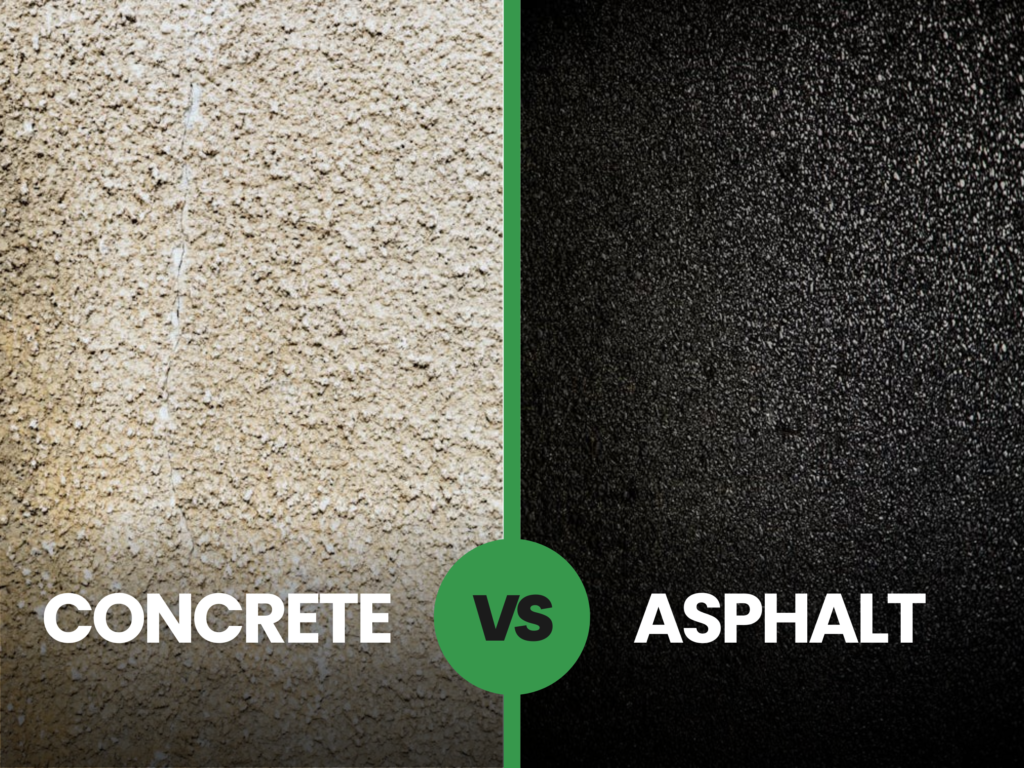
A good road or car park surface can make a massive difference to the vast numbers of people who use it on any given day. So, you’ve got a choice: concrete vs asphalt. Which of those is best for your project? Here at Midlands Road Surfacing, we firmly believe your best option is asphalt, and here’s why.
How do concrete and asphalt behave under daily traffic?
Concrete surfaces are created by laying continuously reinforced or roller-compacted concrete over a prepared base, which, once cured, spreads the load on the surface across its width and depth.
Concrete is very good at holding its shape under static loads. Its weight distribution characteristics can be very useful for surfaces used by a lot of slow-moving, heavy vehicles.
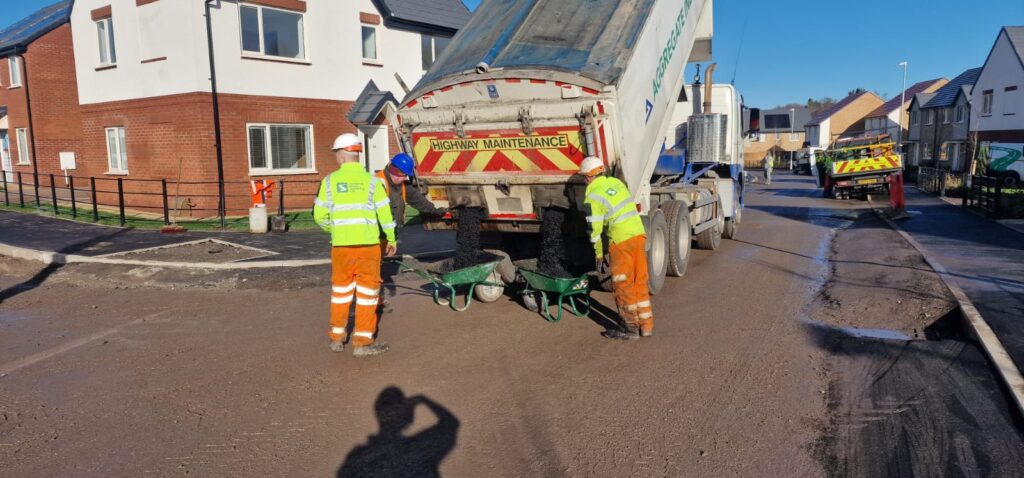
However, asphalt is different. Instead of a single, thick layer, crews lay it in courses. They compact it while it’s still hot to ensure it forms a continuous, deep and smooth surface. The traffic load spreads through the layers and into the base. This makes it a strong all-round option, suitable for a wide variety of mixed traffic. That’s part of the reason why over 95% of UK roads use asphalt, and why only 4% of our motorways and A roads are made of concrete.
What’s better in weather, concrete vs asphalt?
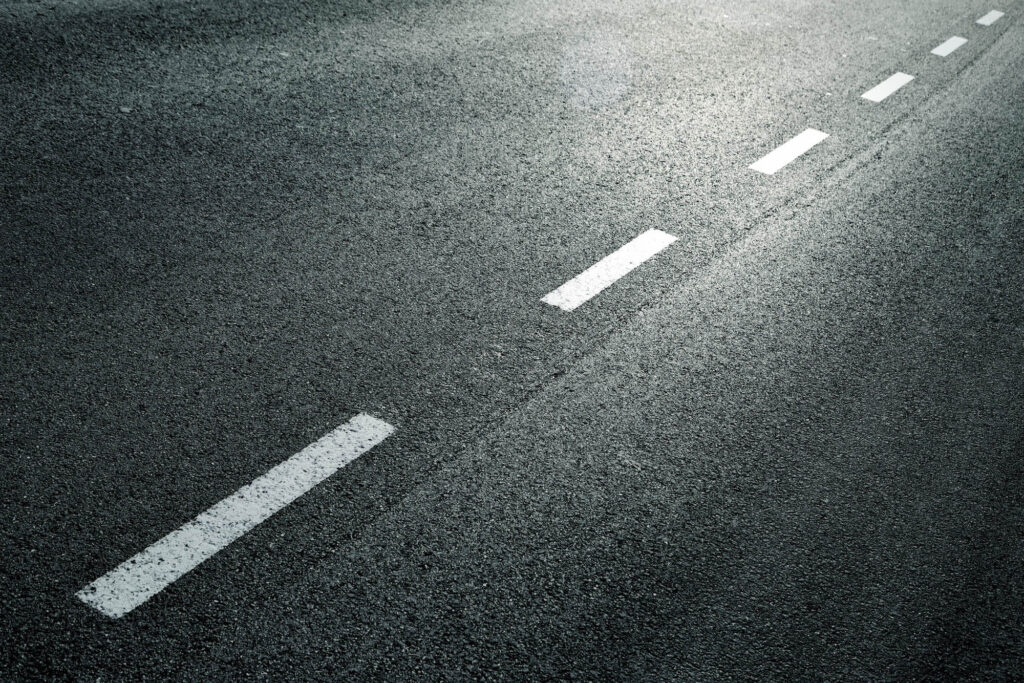
Then there’s the weather to think about. Here in the Midlands, like the rest of the UK, we see a lot of grey, damp drizzle. Most winters, we also go through a few freeze-thaw cycles. Then, some summers, like the one just gone, can be blisteringly hot.
Asphalt flexes with temperature changes and ground movement. That means it’s better at maintaining its surface integrity where services run below the carriageway or where ground conditions vary. In contrast, concrete remains rigid year-round. Again, that’s okay, but it’s far more suitable for covered or controlled environments that aren’t as exposed to the elements.
Does concrete or asphalt have more grip?
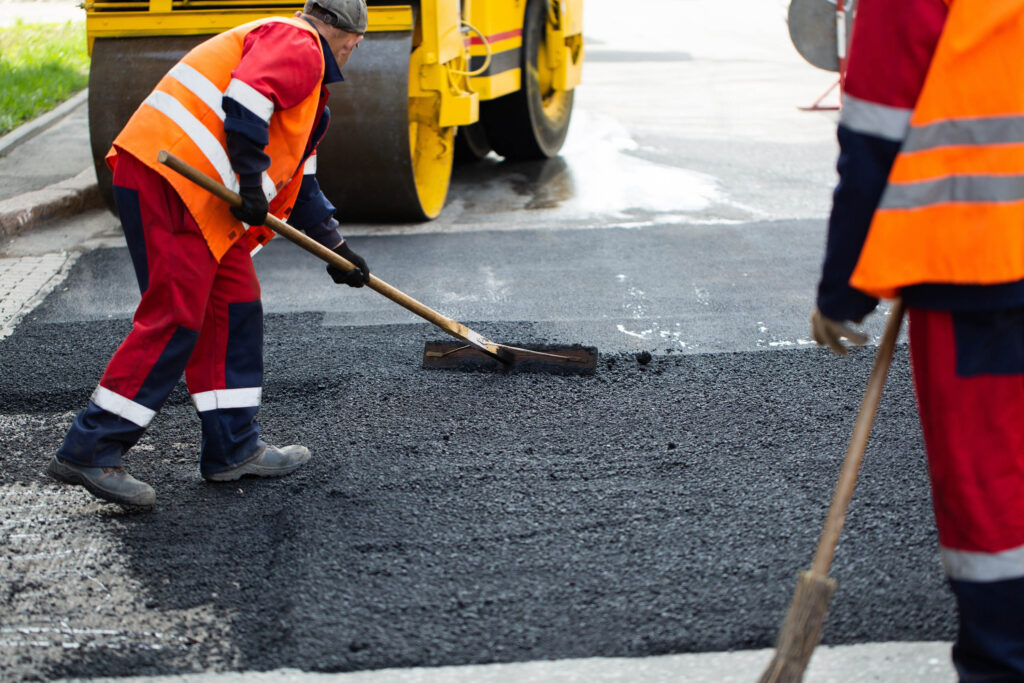
Surface texture makes a massive difference to how well tyres grip. When a contractor lays asphalt, they have a high level of control over the size of the aggregates and the content of the binder. This means they can basically lay a custom surface tailored to make the road as grippy as possible for the expected traffic. While you can get grippy concrete, it suits specific sites much better than the UK’s broad road networks.
Grip is, of course, essential to consider, but so is noise. In the UK, we have a high population exposed to traffic and traffic noise, especially around areas such as Birmingham and its suburbs, the Black Country, Coventry, Nottingham, Derby and Stoke-on-Trent. The quieter you can make those roads, the less disturbance for residents. Asphalt can reduce traffic noise compared to concrete surfaces. Porous asphalt can lower noise levels by 3-5 decibels, which is noticeable to the human ear. Its softer, more flexible surface absorbs sound better than rigid concrete, while its texture reduces tyre noise. However, its noise reduction benefits can diminish as the asphalt ages.
What does lifecycle cost look like for roads and pavements?
If you need a new road, car park or pavement, and you’re considering asphalt or concrete, there will, of course, be an initial cost to lay the surface. Concrete typically involves a higher upfront spend due to materials, curing time and jointing requirements. Asphalt usually comes in at a lower installation cost because, once the contractors have prepared the sub-base, they can lay the asphalt in one go.
A well-constructed asphalt road typically delivers at least 20 years of service life when maintained correctly. You’ll need crews to periodically resurface any wearing courses or seal defects and strengthen sections without fully reconstructing the road surface.
In the right context, concrete surfaces also carry long design lives and good lifecycle costs. In controlled environments such as the ports and sites mentioned earlier, a concrete surface may last several decades before requiring major intervention. However, work on concrete does involve longer closures, so it’s far less appropriate for busy town streets.
Over a full lifecycle, asphalt offers predictable spend, flexible maintenance and lower disruption costs. For most roads, pavements and car parks across the Midlands, that balance keeps the costs under control while maintaining performance.
Of course, the speed of the installation isn’t just about your budget. A new asphalt road or car park can reopen to the public much more quickly, and you can usually see traffic returning the same day. That means limited disruption, reduced traffic management costs and happier residents and businesses.
Is an asphalt or concrete road better for the environment?
As a local authority, developer or site manager, you know how important environmental considerations are these days. And here, asphalt offers several advantages compared with concrete:
- Local asphalt production means shorter haulage distances.
- Asphalt is almost 100% recyclable, reducing raw material demand and landfill waste.
- Lower installation temperatures mean reduced energy use.
Concrete can also bring environmental benefits, particularly where its long life suits the application. Its strength is well-suited to private car parks, loading bays and areas with frequent heavy loads, such as long-term construction sites, harbours or large equipment manufacturing or servicing facilities. In those settings, it supports operational efficiency. However, so does asphalt, which, as we’ve seen, is cheaper and quicker to install.
Get your asphalt surface from Midlands Road Surfacing
We work with asphalt because we believe it’s the superior choice for most surfaces. While there’s undoubtedly a time and a place for concrete, we’re convinced that when it comes to concrete vs asphalt, asphalt is the best solution in most public use cases.
Here at MR Surfacing, we specialise in laying asphalt for roads, car parks and more across the Midlands. This includes dropped kerbs and pavements, and pothole repairs. Whether you’re a local authority looking for a new road or a site manager needing some new parking space, our solutions could be just what you need. To learn more about our asphalt surfacing solutions across the Midlands, get in touch with our team at MR Surfacing today.