
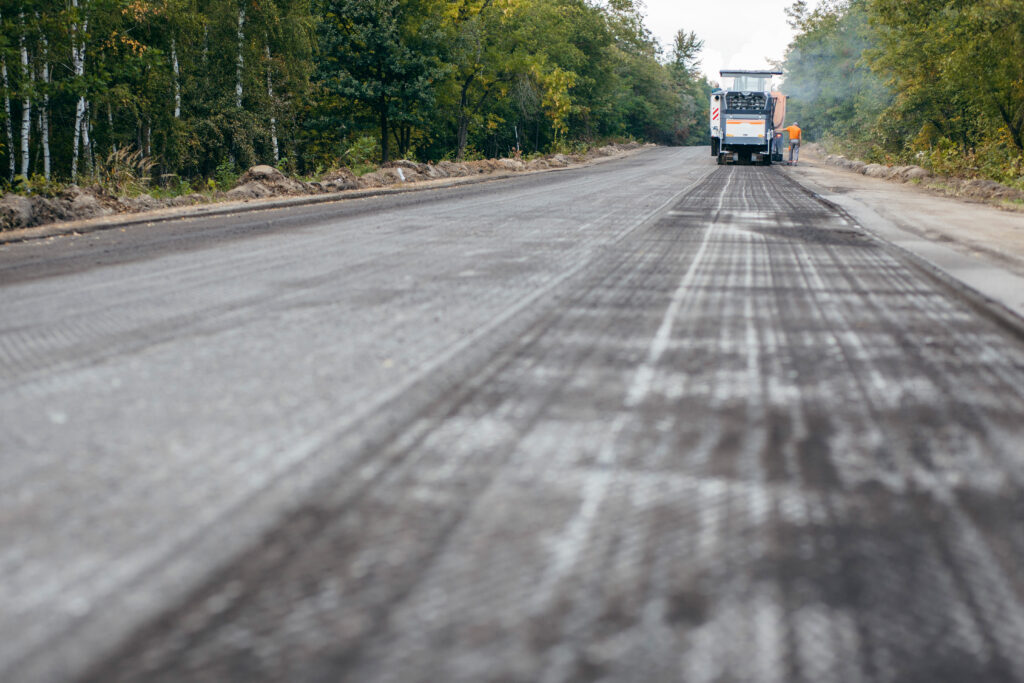
Your worn road, car park or pavement may appear ready for a new layer of asphalt. However, depending on its condition, level and drainage, simply laying a new surface directly on top of the old one may not be the best long-term option. Instead, investing in the proper preparation work makes a major difference to the final result.
Road planing removes the existing top layer of asphalt to a controlled depth before you begin the resurfacing process. Provided your original sub-base is still suitable and stable, it creates the right depth and a prepared surface for new material, helps manage levels, and avoids unnecessary excavation. This blog explains what road planing is and how it can improve the finish of your next resurfacing job.
Why not simply lay new asphalt over the existing surface?
Laying fresh asphalt over an old surface may sound like the easiest option, but it’s not usually the right long-term option. As each layer adds height, it can create awkward levels around kerbs, entrances, door thresholds, drainage channels, manholes and inspection covers.
This can create access problems for vehicles and pedestrians, introduce trip hazards or leave metalwork sitting below the new surface. It may also affect drainage, because if the existing area has low spots, uneven levels or water that already pools in certain places, covering it can leave those issues underneath the new asphalt. If unresolved drainage problems have contributed to potholes or surface deterioration, they may affect the new surface over time as well.
Now, with all that said, an overlay can still work well in the right situation. The important thing is checking the existing surface, drainage layout, surrounding levels and available height before deciding on the best approach. In most cases, road planing is a worthwhile investment.
What is road planing?
Road planing uses a specialist, heavy-duty machine to strip away the top layer of asphalt to a pre-determined depth. The machine removes damaged or worn material while leaving suitable lower layers and the existing sub-base in place.
The planed asphalt can be recycled and incorporated into the new surface. The removed material is collected and taken away to a recycling facility or suitable disposal site, depending on the project arrangements. Then, once the area has been prepared, levelled and checked, fresh asphalt can be laid over the retained foundation.
How road planing improves resurfacing results
Road planing can improve your resurfacing results in the following ways:
- Creates the right depth for fresh asphalt. Removing the existing surface to a controlled depth allows new material to be laid to the intended thickness and profile, rather than building on an uneven or worn layer.
- Improves levels and supports drainage. The resurfacing team can set more consistent levels and suitable falls, helping direct water towards gullies or other drainage points. The wider drainage layout should still be assessed.
- Avoids rebuilding sound parts of the surface. Where the lower layers are structurally suitable, they can remain in place. This reduces unnecessary excavation, replacement materials and waste, while helping keep costs proportionate to the work required.
- Makes works easier to manage on active sites. By focusing on the surface layer that needs replacing, road planing can reduce the scale of preparation work. This can be particularly helpful where vehicle access, customers, deliveries or public movement need to be considered during the project.
When road planing may not be enough
We don’t claim that road surfacing is a magical fix for all surfaces. It’s most effective when the problem is confined to the upper asphalt layer, with the lower structure and sub-base still in good condition.
If there’s major movement, a failed sub-base, severe drainage problems, or other forms of deep deterioration, you may need more extensive repairs than road planing. These cases may require more targeted excavation, drainage works or full reconstruction, depending on the condition of the pavement.
A site assessment from an experienced resurfacing contractor will help you understand your specific circumstances.
What to look for in a road planing and resurfacing contractor
A good road planing and resurfacing contractor, like MR Surfacing, will complete a site assessment. From there, we’ll explain whether the lower layers can be retained, what level of planing is required, and how the new surface will work around drainage, access points and surrounding features.
All these factors are included in the project’s cost. However, the important thing is your investment over time. That’s why you should look for estimates on the project’s finished durability. For example, a £20,000 resurfacing quote without planing may cost more in the long run than a £30,000 quote that includes it. Where planing is needed, it can give the new surface a better starting point and reduce the risk of earlier repairs or replacement.
While you’re looking at and talking with contractors, check for clear pricing, relevant experience, suitable equipment, evidence of organisation and logistics, waste removal, site safety and no-hidden-fees.
At MR Surfacing, we provide road planing and site preparation services for roads, pavements, car parks, and other asphalt areas. Contact our team today to discuss your site and find out whether road planing is the most cost-effective and sensible approach for your next resurfacing project.