
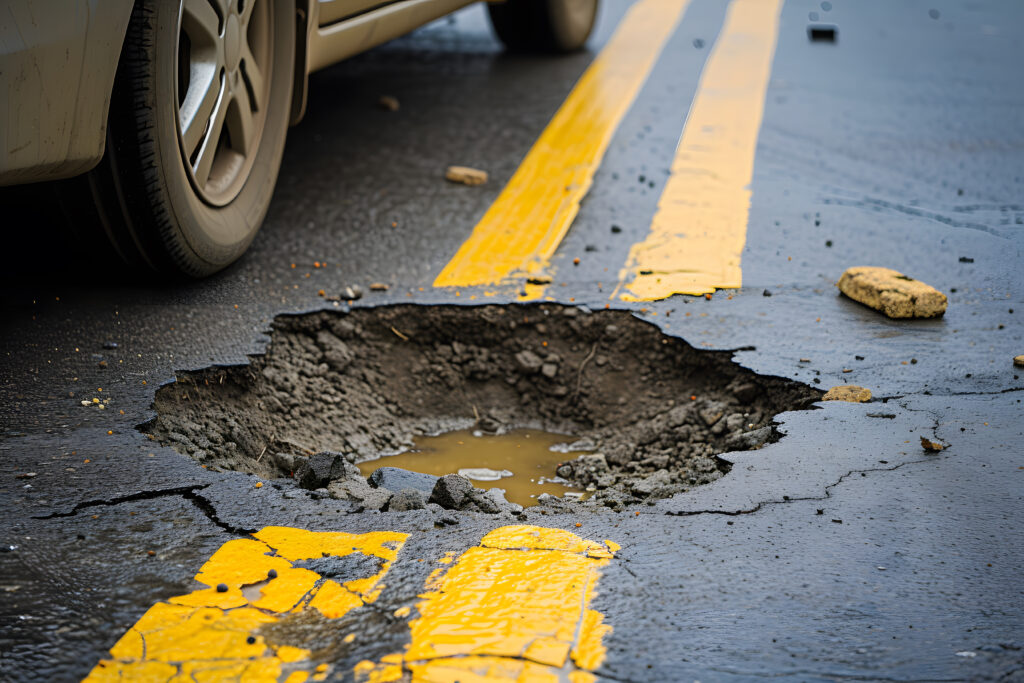
A pothole repair should leave your surface safer, smoother and ready for everyday use. Yet in some cases, the same area begins to break up again soon afterwards. Sometimes, very soon.
Why?
Potholes often reappear after being repaired because the visible pothole was only part of the problem. The visible defect may have been treated, but the underlying cause may still be affecting the area. Water, weakened ground beneath the surface, drainage issues or heavy traffic may still be affecting the area.
Finding the cause will help ensure the next repair is right for the surface and its use, so the pothole is less likely to come back in the near future. That’s what this blog is about.
Why do potholes form in the first place?
Potholes start when water gets into the road surface, usually through small cracks or joints. Traffic pushes the water further down, weakening the layers beneath the asphalt.
When temperatures drop, that water freezes and expands, forcing the surface apart from below. Then, as vehicles pass over the weakened area, the top layer breaks up and collapses, leaving the hole you see.
Age plays a part, too. Asphalt hardens and becomes brittle over the years, making it more prone to cracking under load. Poor original construction, thin surfacing or an inadequate sub-base can also shorten a road’s lifespan and make potholes more likely to form.
Heavy or repeated traffic accelerates the process, particularly on roads carrying HGVs, buses or plant machinery. Add in ground movement, poor drainage and the freezing temperatures typical of a British winter, and it’s easy to see why potholes are such a persistent problem on UK roads.
Understanding the root causes is the first step towards making repairs that actually last.
Why do some potholes reappear?
Here are some of the most common reasons for recurring and reopening potholes:
Water gets under the patch
Water can enter through cracks, gaps around the patch or damaged edges. Once it reaches the layers below, it softens and weakens the ground supporting the asphalt.
The base underneath has failed
Although a pothole appears to be surface damage, the supporting sub-base may also be damaged, saturated or otherwise unstable. A new patch is unlikely to last if the base beneath it is weak or unstable. Under traffic, the repair can settle, crack or break up again.
Damaged material was left behind
For a durable pothole repair, all collapsed asphalt and unstable material must be removed. If weak material is left around or beneath the patch, it can continue to break down and cause the repaired area to fail again.
The patch wasn’t compacted well
Asphalt must be compacted to create a dense, stable surface. Poor compaction can leave small gaps that allow water in and increase the likelihood that the repair will break up under traffic.
A short-term fix was used for a long-term problem
Cold-lay materials are a good option for a quick, short-term repair, particularly in poor weather or when you need immediate access and don’t have time for surface closures. However, you need a hot asphalt repair for longer-lasting results.
Weak edges around the pothole
A pothole repair needs clean edges cut back to sound asphalt. If the patch is laid against cracked or crumbling material, water can enter at the joint and traffic causes the repair to break down again.
Heavy traffic wears it down
Cars, vans, HGVs, plant machinery and repeated turning movements put pressure on the surface. If you have heavy traffic, the repair must be designed to withstand the loads.
Water isn’t draining away
Standing water seeps into cracks and joints, weakening the surface over time. Poor falls, blocked drainage or damaged channels can cause the same area to fail again and again. You may require deeper, more structural repairs.
Frost makes cracks worse
Water in cracks expands when it freezes. This pushes the asphalt apart and weakens the area around a repair, especially if the water isn’t already draining away properly.
Know that you can’t control all the factors
Even the best-quality surface will wear down over time and may eventually form potholes. Rain, frost, thawing weather, ground movement and daily traffic can all take their toll. Small cracks will inevitably develop, and some potholes may reappear over time, especially in areas exposed to water, heavy use, or ongoing surface movement.
Rather than expecting every repair to prevent future damage forever, aim to catch developing potholes early, before water gets beneath the surface and causes more serious damage. Good drainage, timely repairs and regular maintenance will all help your surface stay in good condition for longer.
Get the right repair for a repeat pothole
So, what do you do when a pothole keeps reappearing after being repaired?
First, rather than simply filling the hole again, assess the wider area. If the lower layers or sub-base have failed, you may require deeper excavation, new sub-base material and full asphalt reinstatement.
Where water is contributing to the damage, drainage improvements may be an important part of the solution. In other cases, repeated potholes, cracking and worn edges can show that a wider section is nearing the end of its serviceable life. Road planing and resurfacing may offer better long-term value than repeated small repairs.
At MR Surfacing, we provide pothole repairs, excavation and reinstatement, drainage works, road planing and resurfacing for commercial, public-sector and private surfaces. Get in touch with our team to discuss a recurring pothole and arrange a practical, long-term repair for your site or road.